How to Read a Star Map: A Beginner’s Guide
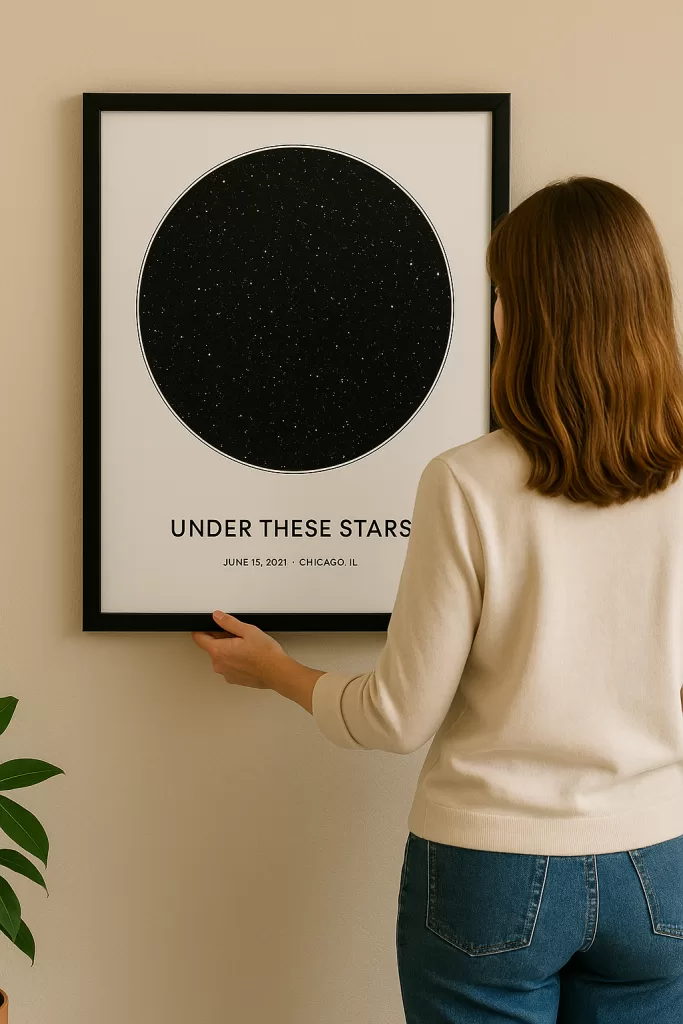
If you’ve just received a star map as a gift or purchased one to commemorate a special moment, you might be wondering: how do I actually read it? At first glance, all the tiny dots and patterns may feel overwhelming. But once you know the basics, your star chart transforms from a beautiful artwork into a map of the night sky you can actually navigate.
Step 1: Understand What the Dots Represent
Each dot on your star map corresponds to a real star in the night sky. The larger or bolder the dot, the brighter the star appears in real life. Smaller dots represent dimmer stars that may be harder to see with the naked eye.
Your map is not random. It’s generated using astronomical data to match the exact date, time, and location you chose. That means it reflects the real sky exactly as it appeared during that special moment.
Step 2: Find the Brightest Stars First
When learning how to read a star map, it helps to start with the most obvious points of light. Look for the largest dots on your map. These are the brightest stars in the sky. Examples include:
Sirius – the brightest star, found in the constellation Canis Major.
Betelgeuse and Rigel – bright stars in Orion.
Vega – a standout in the constellation Lyra.
Spotting these stars will give you reference points to navigate the rest of your map.
Step 3: Learn to Identify Constellations
Constellations are patterns of stars that form recognizable shapes. Your star map won’t usually have lines drawn between them, but with practice, you’ll start to trace them yourself. A few beginner-friendly constellations to look for are:
Orion – marked by his famous three-star “belt.”
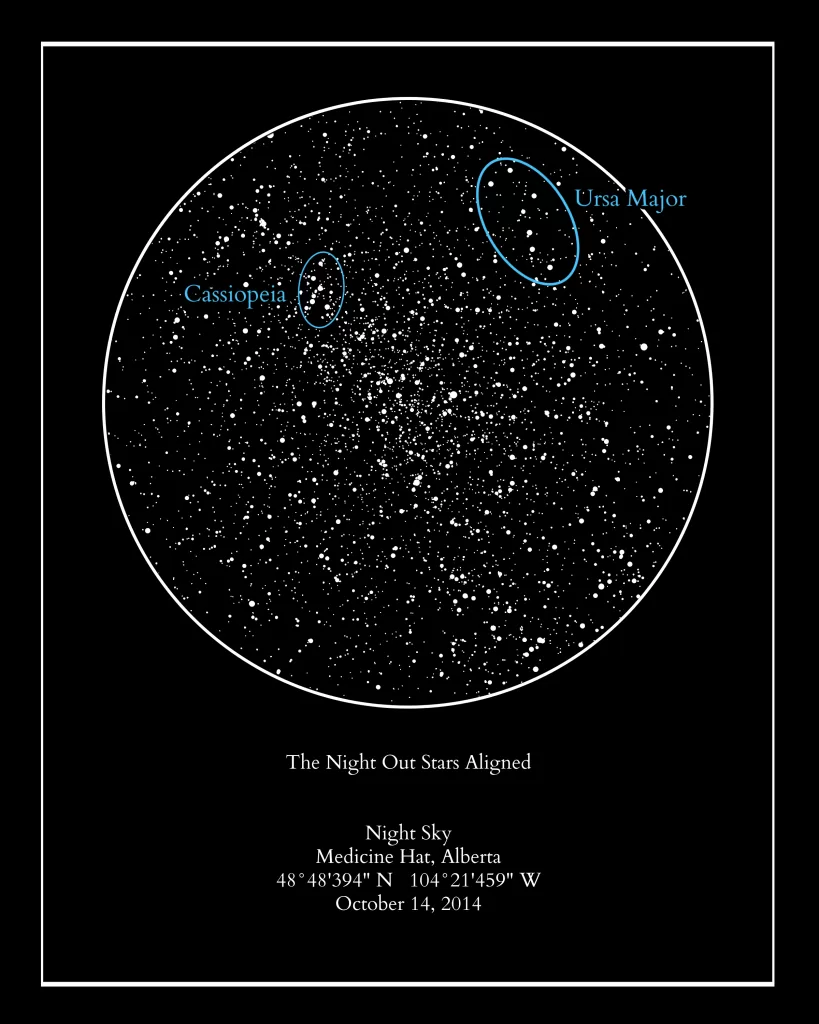
Ursa Major (the Big Dipper) – a seven-star pattern that helps locate the North Star.
Cassiopeia – a distinct “W” shape in the northern sky.
Once you’ve identified one constellation, you can use it to “hop” across the map to find others.
Step 4: Notice the Orientation
Your star map may look different depending on the hemisphere, time of year, and location. For example, someone in Canada will see a very different arrangement than someone in Australia. If your map feels confusing, try rotating it slightly until patterns align with the constellations you know.
Step 5: Add Context With Stories
One of the most magical things about reading a star map is discovering the mythology and meaning behind the constellations. For centuries, cultures have told stories about Orion the hunter, Cassiopeia the queen, and Ursa Major the great bear. Adding these stories makes your map more than just dots. It becomes a link between science, history, and your own memories.
Why Learn to Read Your Star Map?
Your personalized star map isn’t just art. It’s a snapshot of the exact sky from a meaningful date and place in your life. Learning to read it deepens that connection and turns it into an experience you can share with loved ones.
Take It Further
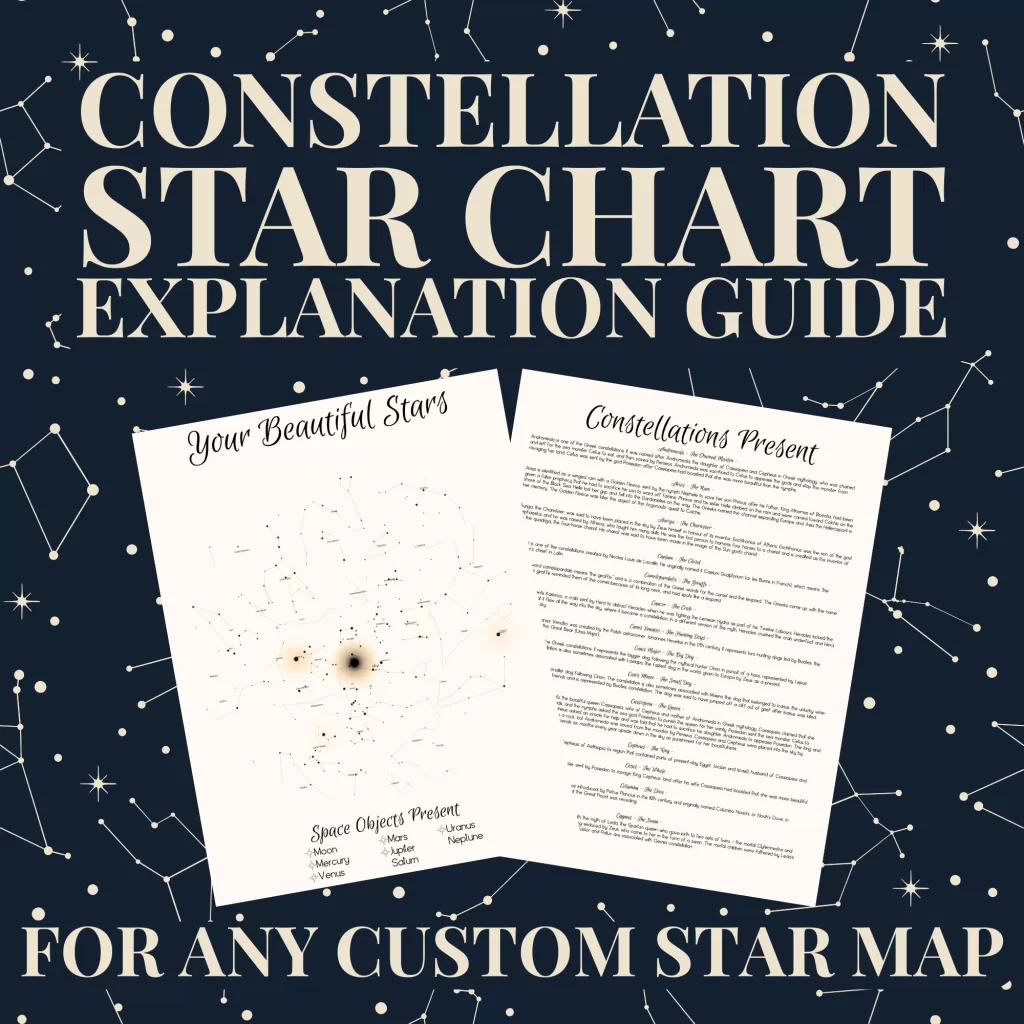
If you’d like a simple guide to walk you through your map, our Star Map Information Sheet is the perfect companion. It explains the meaning behind the dots and helps you easily identify constellations, making your keepsake even more interactive and meaningful.